Showing posts with label House of Normans. Show all posts

Wednesday, August 20, 2014

Notes On: Lady Isabella Perez de Castile


Isabella of Castile, Duchess of York

From Wikipedia, the free encyclopedia
  (Redirected from Infanta Isabella of Castile)
For other people named Isabella of Castile, see Isabella of Castile (disambiguation).
Isabella of Castile
Duchess of York
180ps
SpouseEdmund of Langley, 1st Duke of York
IssueEdward of Langley, 2nd Duke of York
Constance of York
Richard of Conisburgh, 3rd Earl of Cambridge
HouseBurgundy (by birth)
York (by marriage)
FatherPeter of Castile
MotherMaría de Padilla
Born1355
Died23 December 1392
BurialKings Langley, Hertfordshire
Isabella of Castile, Duchess of York (1355 – 23 December 1392) was the daughter of King Peter of Castile and María de Padilla (d.1361). She accompanied her elder sister, Constance, to England after Constance's marriage to John of Gaunt, 1st Duke of Lancaster, and married Gaunt's younger brother, Edmund of Langley, 1st Duke of York.[1]

Contents

  [show] 

Life[edit]

Isabella of Castile (c. 1355 – 23 December 1392) was the youngest of the three daughters of King Peter of Castile by his favourite mistress, María de Padilla (d.1361).[2]
On 21 September 1371 Edward III's fourth son, John of Gaunt, 1st Duke of Lancaster, married Isabella's elder sister, Constanza (d.1394), who after the death of her father in 1369 claimed the throne of Castile. Isabella accompanied her sister to England, and on 11 July 1372, at about the age of 17, married John of Gaunt's younger brother,Edmund of Langley, 1st Duke of York, fifth son of King Edward III and Philippa of Hainault, at Wallingford, Oxfordshire, as part of a dynastic alliance in furtherance of Gaunt's claim to the crown of Castile.[3] According to Pugh, Isabella and Edmund of Langley were 'an ill-matched pair'.[4]
As a result of her indiscretions, including an affair with King Richard II's half-brother, John Holland, 1st Duke of Exeter (d.1400), whom Pugh terms 'violent and lawless', Isabella left behind a tarnished reputation, her loose morals being noted by the chronicler Thomas Walsingham. According to Pugh, the possibility that Holland was the father of Isabella's favourite son, Richard of Conisburgh, 3rd Earl of Cambridge, 'cannot be ignored'.[5]
In her will Isabel named King Richard as her heir, requesting him to grant her younger son, Richard, an annuity of 500 marks. The King complied. However, further largess which might have been expected when Richard came of age was not to be, as King Richard II was deposed in 1399, and according to Harriss, Isabella's younger son, Richard, 'received no favours from the new King, Henry IV'.[6]
Isabella died 23 December 1392, aged about 37, and was buried 14 January 1393 at the church of the Dominicans at Kings Langley.[7] After Isabella's death, Edmund of Langley married Joan Holland, sister and co-heir of Edmund Holland, 4th Earl of Kent (9 January 1382 – 15 September 1408), with whom his daughter, Constance, had lived as his mistress (see above).[8]
Isabella was named a Lady Companion of the Order of the Garter in 1378.[citation needed]

Issue[edit]


Coat of arms of Castile and Leónwhich Isabel adopted as the daughter of King Peter of Castile. Quarterly, Castille and Leon (Kingdom of Castille).[9]
Isabella and Edmund of Langley, 1st Duke of York, had three children:

Shakespeare and Isabella of Castile[edit]

Isabella is depicted, unhistorically, as living in late December 1399 at the time of the Epiphany Rising in Act V of Shakespeare's Richard II.

(From: Find A Grave)


Tomb that contains the remains of Isabella of Castile her husband Edmund of Langley and their daughter in law Anne Mortimer


Birth: 1355
Zamora
Castilla y León, Spain
Death: Dec. 23, 1392
Kings Langley
Hertfordshire, England

Infanta Isabella of Castile, Duchess of York was the daughter of King Peter of Castile and María de Padilla. She was a younger sister of Constance, Duchess of Lancaster.

On March 1, 1372, Isabella married Edmund of Langley, 1st Duke of York, he was the fourth son of Edward III of England and Philippa of Hainault, at Wallingford, England. As a result of her marriage, she became the first of a total of eleven women who became Duchess of York. They had three children:

Edward of Norwich, 2nd Duke of York (1373 – 25 October 1415).
Constance of York (1374 – 29 November 1416). Married Thomas le Despenser and was mother of Isabel le Despenser, Countess of Worcester and Warwick.
Richard of Conisburgh, 3rd Earl of Cambridge (1375 – 5 August 1415).

She was named a Lady Companion of the Order of the Garter in 1378. Isabella died 23 December 1392 and on 14 January 1393 was buried in Kings Langley Manor House in Hertfordshire, England.
Isabel lies entombed with her husband in King's Langley. By the terms of her will, dated December 6, 1392, she asked that a hundred trentals and a hundred sauters were to be said for her soul, and four priests, or one at least, were to sing for her by the space of four years. Upon the day of her burial her best horse was to be delivered for her mortuary. She bequeathed to the King her heart of pearls; to the Duke of Lancaster, a tablet of jasper, given her by the King of Armenia; to her son Edward, her crown, to remain to his heirs; to Constance le Despencer, her daughter, a fret of pearls; to the Duchess of Gloucester, her tablet of gold with images, and also her sauter with the arms of Northampton; and to the King the residue of her goods, in trust that he should allow his godson Richard, her younger son, an annuity of 500 marks for life, a trust which the King, out of the great respect he bore to her, accepted.

Originally interred in the Church of the Friary at Langley, the remains of the Duke and his wife were brought to All Saint's, King's Langley, about the year 1574.

The couple were destined for a second exhumation. On November 22, 1877, Professor George Rolleston, M.D. The professor was expecting to find two remains instead he found three. The remains are those of Isabella of Castile, her husband Edmund of Langley and the third are those of their daughter in law Anne Mortimer

Family links:
 Parents:
  Peter of Castile (1334 - 1369)
  Maria De Padilla (1334 - 1361)

 Spouse:
  Edmund of Langley (1341 - 1402)*

 Children:
   Constance of York (1374 - 1416)*
  Richard of Conisbrough (1385 - 1415)*

 Sibling:
  Constance De Castille (1354 - 1394)**
  Isabella Perez de Castile (1355 - 1392)


Wednesday, October 9, 2013

Richard I "the Fearless" and Gunnora

Richard I, Duke of Normandy
Richard I "the Fearless" or (French) "Sans Peur" 

Richard the Fearless as part of the Six Dukes of
Normandy statue in the town square of Falaise

Richard I of Normandy (933–996), also known as Richard the Fearless (French: Sans Peur), was the Duke of Normandy from 942 to 996.  Dudo of Saint-Quentin, whom Richard commissioned to write his De moribus et actis primorum Normanniae ducum (Latin: On the Customs and Deeds of the First Dukes of Normandy), called him a dux, but this use of the word may have been in the context of Richard's leadership in war, and not a reference to a title of nobility.Richard either introduced feudalism into Normandy, or he greatly expanded it. By the end of his reign, most important landholders held their lands in feudal tenure.

Birth

Richard was born to William I of Normandy, princeps or ruler of Normandy, and Sprota. He was also the grandson of the famous Rollo. He was about 10 years old when his father was killed on 17 December 942.  His mother was a Breton concubine captured in war and bound to William by a Danish marriage.  William was told of the birth of a son after the battle with Riouf and other Viking rebels, but his existence was kept secret until a few years later when William Longsword first met his son Richard. After kissing the boy and declaring him his heir, William sent Richard to be raised in Bayeux. After William was killed, Sprota became the wife of Esperleng, a wealthy miller; Rodulf of Ivry was their son and Richard's half-brother.


Life

When his father died, Louis IV of France seized Normandy, installed the boy Richard in his father's office, then placed him in the care of the count of Ponthieu. The king then split the lands, giving lands in lower Normandy to Hugh the Great. Louis kept Richard in confinement at Lâon, but he escaped with the assistance of Osmond de Centville, Bernard de Senlis (who had been a companion of Rollo of Normandy), Ivo de Bellèsme, and Bernard the Dane (ancestor of families of Harcourt and Beaumont).

In 946, Richard agreed to "commend" himself to Hugh, Count of Paris. He then allied himself with the Norman and Viking leaders, drove Louis out of Rouen, and took back Normandy by 947.


In 962 Theobald I, Count of Blois, attacked Rouen, Richard’s stronghold, but his army was defeated by the Normans and retreated never having crossed the Seine. Lothair king of the West Franks stepped in to prevent any further war between the two.

Afterwards, and until his death in 996, Richard concentrated on Normandy itself, and participated less in Frankish politics and petty wars. In lieu of building up the Norman Empire by expansion, he stabilized the realm, and united his followers into a cohesive and formidable principality.

Richard used marriage to build strong alliances . His marriage to Emma connected him to the Capet family. His wife Gunnor, from a rival Viking group in the Cotentin, formed an alliance to that group, while her sisters form the core group that was to provide loyal followers to him and his successors.  His daughters provided valuable marriage alliances with powerful neighboring counts as well as to the king of England.


He also built on his relationship with the church, restoring their lands and insured the great monasteries flourished. His reign was marked by an extended period of peace and tranquility.


Marriages

His first marriage (960) was to Emma, daughter of Hugh "The Great" of France, and Hedwig von Sachsen.  They were betrothed when both were very young. She died after 19 March 968, with no issue.

According to Robert of Torigni, not long after Emma's death, Duke Richard went out hunting and stopped at the house of a local forester. He became enamoured of the forester's wife, Seinfreda, but she being a virtuous woman, suggested he court her unmarried sister, Gunnor, instead. Gunnor became his mistress, and her family rose to prominence. Her brother, Herefast de Crepon, may have been involved in a controversial heresy trial. Gunnor was, like Richard, of Viking descent, being a Dane by blood. Richard finally married her to legitimize their children:

Gonnor, wife of Richard I, confirming a charter of the abbey
of the Mount-Saint-Michel, from archive of the abbey
Gunnora (or Gunnor) 
(c. 950–c. 1031), Duchess of Normandy, she was the (2nd) wife of Richard I of Normandy.

All that is known of Gunnora's parentage is that she belonged to a family who had settled in the Pays de Caux.  Robert of Torigni wrote she was a forester's daughter from the Pays de Caux and according to Dudo of Saint-Quentin she was of noble Danish origin. Gunnora was probably born c. 950. Her family held sway in western Normandy and Gunnora herself was said to be very wealthy. Her marriage to Richard I was of great political importance, both to her husband and her progeny. Her brother, Herfast de Crepon, was progenitor of a great Norman family.  Her sisters and nieces married some of the most important nobles in Normandy.

Robert of Torigni recounts a story of how Richard met Gunnora. She was living with her sister Seinfreda, the wife of a local forester, when Richard, hunting nearby, heard of the beauty of the forester's wife. He is said to have ordered Seinfreda to come to his bed, but the lady substituted her unmarried sister, Gunnora. Richard, it is said, was pleased that by this subterfuge he had been saved from committing adultery and together they had three sons and three daughters. Unlike other territorial rulers, the Normans recognized marriage by cohabitation or more danico. But when Richard was prevented from nominating their son Robert to be Archbishop of Rouen, the two were married, "according to the Christian custom", making their children legitimate in the eyes of the church.

Gunnora attested ducal charters up into the 1020s, was skilled in languages and was said to have had an excellent memory. She was one of the most important sources of information on Norman history for Dudo of St. Quentin. As Richard's widow she is mentioned accompanying her sons on numerous occasions. That her husband depended on her is shown in the couple's charters where she is variously regent of Normandy, a mediator and judge, and in the typical roll of a medieval aristocratic mother, an arbitrator between her husband and their oldest son Richard II.

Gunnora was a founder and supporter of Coutances Cathedral and laid its first stone. In one of her own charters after Richard's death she gave two alods to the abbey of Mont Saint-Michel, namely Britavilla and Domjean, given her by her husband in dower, which she gave for the soul of her husband, and the weal of her own soul and that of her sons "count Richard, archbishop Robert, and others..." She also attested a charter, c. 1024–26, to that same abbey by her son, Richard II, shown as Gonnor matris comitis (mother of the count). Gunnora, both as wife and countess, was able to use her influence to see her kin favored, and several of the most prominent Anglo-Norman families on both sides of the English Channel are descended from her, her sisters and nieces.  Gunnora died c. 1031.

Richard & Gunnora's children
  • Richard II "the Good", Duke of Normandy
  • Robert, Archbishop of Rouen, Count of Evreux
  • Mauger, Earl of Corbeil
  • Emma of Normandy, wife of two kings of England
  • Maud of Normandy, wife of Odo II of Blois, Count of Blois, Champagne and Chartres
  • Hawise of Normandy m. Geoffrey I, Duke of Brittany
  • Papia of Normandy
  • William, Count of Eu
Illegitimate Children

Richard was known to have had several other mistresses and produced children with many of them.

Known children are:
  • Geoffrey, Count of Eu
  • William, Count of Eu (ca. 972-26 January 1057/58),m. Lasceline de Turqueville (d. 26 January 1057/58).
  • Beatrice of Normandy, Abbess of Montvilliers d.1034 m. Ebles of Turenne (d.1030 (divorced)
Possible children
  • Muriella, married Tancred de Hauteville
  • Fressenda or Fredesenda (ca. 995-ca. 1057), second wife of Tancred de Hauteville.

Death:

Richard died in Fecamp, France, on 20 November 996.


Depictions in Fiction

The Little Duke, a Victorian Juvenile novel by Charlotte Mary Yonge: is a fictionalized account of Richard's boyhood and early struggles.

(source: Wikipedia) 

William "Longsword" and Sprota

William "Longsword" and Sprota are (in the line I am working on) my 34x Great Grandparents....

I found this at http://familypedia.wikia.com .... most the information is taken from there, but I have edited it ...


William Longsword, 2nd Duke of Normandy (893-942)

Birth: 893
Death: 17 December 942
Father: Rollo of Normandy (860-932)
Mother: Poppa van Bayeux (c870-c910)

Spouse:
Sprota (?-?)
Wedding: 932
Spouse (2):
Liutgard (?-?)

Wikipedia Information on Sprota:

Sprota was the name of a Breton captive who William I, Duke of Normandy took as a wife in the Viking fashion (more danico) and by her had a son, Richard I, Duke of Normandy. After the death of her husband William, she became the wife of Esperleng and mother of Rodulf of Ivry.

Life

The first mention of her is by Flodoard of Reims and although he doesn't name her he identifies her under the year as the mother of "William’s son [Richard] born of a Breton concubine". Her Breton origins could mean she was of Celtic, Scandinavian, or Frankish origin, the latter being the most likely based on her name spelling. Elisabeth van Houts wrote "on this reference rests the identification of Sprota, William Longsword’s wife 'according to the Danish custom', as of Breton origin". The first to provide her name was William of Jumièges. The irregular nature (as per the Church) of her relationship with William served as the basis for her son by him being the subject of ridicule, the French King Louis "abused the boy with bitter insults", calling him "the son of a whore who had seduced another woman's husband."

At the time of the birth of her first son Richard, she was living in her own household at Bayeux, under William's protection. William, having just quashed a rebellion at Pré-de Bataille (c.936), received the news by a messenger that Sprota had just given birth to a son; delighted at the news William ordered his son to be baptized and given the personal name of Richard. William's steward Boto became the boy's godfather.

After the death of William Longsword and the captivity of her son Richard, she had been 'collected' from her dangerous situation by the 'immensely wealthy' Esperleng. Robert of Torigni identified Sprota's second husband[b] as Esperleng, a wealthy landowner who operated mills at Pîtres.

Family

By William I ‘Longsword’ she was the mother of:
Richard I, Duke of Normandy
By Esperling of Vaudreuil she was the mother of:
Rodulf, Count of Ivry
several daughters who married Norman magnates


William I, 2nd Duke of Normandy, AKA: William Longsword:

(French: Guillaume Longue-Épée, Latin: Willermus Longa 

Spata, Old Norse: Vilhjálmr Langaspjót)

Vital Statistics
Son of Rollo of Normandy - Viking Warrior and 1st Duke of Normandy and his wife Poppa
Born ca 893 C.E.
930-935 : 1st Marriage to Sprota
936-942 : 2nd Marriage to Liutgard
942-Dec-17 : Assassinated -

Biography

Longsword was the second Duke of Normandy from his father's death until his own assassination. The title dux (duke) was not in use at the time and has been applied to early Norman rulers retroactively; William actually used the title comes (count).

Little is known about his early years. He was born in Bayeux or Rouen to Rollo and his wife Poppa. All that is known of Poppa is that she was a Christian, and the daughter to Berengar of Rennes, the previous lord of Brittania Nova, which eventually became western Normandy. According to the William's planctus, he was baptised a Christian.

Between 935 and 939, William was married to Leutgarde, daughter of Herbert of Vermandois. He had no legitimate children and his successor, Richard was the son of Sprota who he had apparently married in 930 ‘more danico’.

William succeeded Rollo sometime around 927. It appears that he faced a rebellion early in his reign, from Normans who felt he had become too Gallicised. Subsequent years are obscure. In 939 William became involved in a war with Arnulf I of Flanders, which soon became intertwined with the other conflicts troubling the reign of Louis IV. He was killed by followers of Arnulf while at a meeting to settle their conflict. His son Richard the Fearless, child of his first wife, Sprota, succeeded him. William also left a widow, Liègard (Liutgard), who died in 985.


Assassination of William Longsword

In 939, Herbert supported by Arnulf of Flanders besieged Montreuil and its capture gave him all of Ponthieu and Vimeu between the rivers Somme and Bresle. Herluin II sought the support of Hugh the Great to regain his lands but Hugh refused because he already had an alliance with Arnulf. Herluin then turned to William Longsword for help. Troops from the Cotentin attacked and recaptured Montreuil, slaughtering most of Arnulf’s garrison. But at a price. Herluin had placed his lands under the protection of the Normans and performed homage to William for his help. The Normans were now assured of a buffer between their borders and those of Flanders.

For Arnulf, Hugh the Great and other Carolingian lords the Normans remained undesirable intruders in France and they decided to eliminate William who was becoming too powerful and was increasingly playing a role in the politics of the French monarchy. It was at this moment that Arnulf sent messengers to William Longsword, saying that he wanted to settle their conflict over Montreuil. William went to the meeting on an island in the river Somme at Picquigny, where he was murdered by Arnulf’s men on 18th December 942.

Residence at Falaise

In Falaise France, is a series of statues that pays tribute to the six Norman Dukes from Rollo to William Conqueror. The castle here was the principal residence of the Norman Knights.
Château Guillaume-le-Conquérant

Lineage 

The Funeral Monument - Tomb Effigy 
located in the Cathedral of Rouen


The Planctus of William Longsword
This is a poem, although it survives only in corrupt and incomplete versions and is largely hagiographic in content, nevertheless is a critical source for early Norman history. It is by far the earliest work written about the Normans from a Norman point of view, and some historical nuggets can be gleaned from it.

References
Wikipedia for William Longsword
From Stewart Baldwin on Guillaume "Longue Épée" of Normandy
FMG on GUILLAUME I "Longuespee" Comte de Normandie
History of William Longsword  <-- A Blog with a lot of House of Normans information

Sources and notes
Category: Of Normandy (surname)

Château Guillaume-le-Conquérant 
History of on Wikipedia 


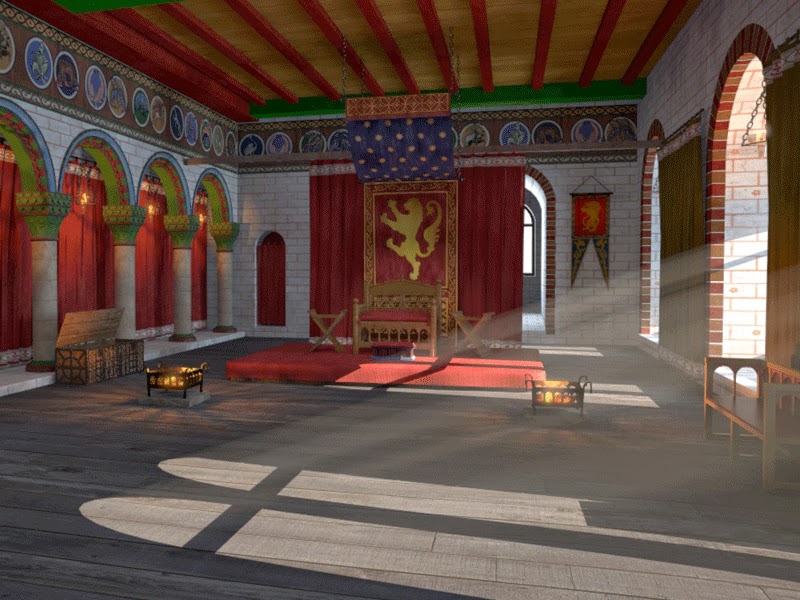
Throne Room recreation?


DNA Project on ROLLO ....


So there is a company Explico, that is trying to do a DNA project on Rollo to discover which of the two stories (Denmark's & Norway's) is true ....

The latest news is .....

- In Normandy, in our search for famous historical figures, closed in the lead on the patriach of William the Conqueror, the great Viking giant Rollo, in order to solve a close to thousand  year old riddle about his origin. To be continued..

Prior to that the announced they were opening his grave ....

November 2012
We are currently planning our goals and projects for 2013. They include DNA collections in the Caucasus mountains, the opening of graves in Normandy (Rollo) and Italy (Hauteville family), and more research done on our projects on the Black Sea shore, the Easter Island, the search for the lost Greenland Vikings and their settlements in America, and several interesting projects in Spain.

April 2012  
Here is an update on our Rollo project: After a long awaited meeting with the French Cultural Department in Paris, we have received confirmation to go on with the project but we are looking still at some more months of processing.

This project has been going on now for a few years.  It'll be interesting to find out what they discover!

Sunday, October 6, 2013

The House of Normandy

My line is as follows Rollo & Poppa to William I "Long Sword" and Sprota, to Richard I "the Fearless" and Gunnora, to Richard II "the Good" and Judith de Rennes, Robert "the Magnificent" and Herleve Falaise, to William "the Conqueror"  and Matilda Flanders, to his son Henry "Beauclerc" King of England and Matilda, to their daughter Matilda and her husband Geoffrey V Plantagenet, to their son Henry II King of England and his wife Eleanor (whom two of her sisters are in other lines as my whatever Great Grandmothers) ... to their son John "Lackland" King of England and his wife Isabella of Angouleme....  ...  so almost everyone ...


ROLLO OR ROLF THE GANGER (r. 911-925)

The ancestors of William the Conqueror and England's line of Norman kings had Norwegian Viking roots. The founder of the line, Rollo or Rolf the Ganger, was a Viking raider chief, who was born in 850, at Maer, Nord-Trondelag, Norway, the son of Ragnvald 'the Wise' Eysteinson and his second wife, Hiltrude (Ragnhild) Hrolfsdottir.

Rolf was granted the region of Normandy by Charles the Simple, King of France, in 911, at the Treaty of Saint-Clair-sur-Epte, in exchange for feudal alliegiance and conversion to Christianity at which he took the baptismal name of Robert. He was baptized in a fountain fed by a spring named in honor of Saint Clair. Rolf took as his second wife Popee, the daughter of the Berengar of Rennes, the previous Lord of Normandy, the marriage produced six children:-

(1) William I 'Longsword' ( 901-0942)

(2) Robert (c. 903-)

(3) Crespina (c. 905-)

(4) Gerlatta (c.907-)

(5) Kathlin (c.909-)

(6) Adela (c.911-962)

Rolf died at Notre Dame at Rouen, Normandy in 925.

WILLIAM LONGWORD (925-942)

William succeeded his father as ruler of Normandy in around 928. He was faced with opposition early in his reign. He was married twice, firstly to Sprota (Adela) of Senlis, a daughter of Hubert, Count of Senlis and Vermandois which produced issue:-

(1) Richard "the Fearless" of Normandy

(2) Raoul D'Ivry

He was married for a second time in 935 to Luitgarda of Vermandois, a niece of his first wife Sprota.

<
In 939 William Longsword became involved in a conflict with Arnulf I of Flanders. He was killed on December 17, 942 by Arnulf's supporters in the course of a meeting to discuss the conflict. An anonymous poet wrote the Planctus , lamenting his death.


RICHARD I, THE FEARLESS (r. 942- 996)

Richard, the eldest son of William Longsword was born at Fecamp in France in 933. He was still a young boy when he succeeded as ruler of Normandy on the death of his father in 942. Richard's mother was a Breton concubine bound to William Longsword by a Danish marriage. After William died, Sprota became the wife of Esperleng, a wealthy miller. Normandy was siezed by Louis IV of France and Richard taken into confinement, from which he eventually escaped and regained Normandy. He was responsible for introducing the feudal system into his domains.

He was married firstly in 960 to Emma of Paris (died 962), the daughter of Hugh Capet, King of France, from which marriage there was no issue and secondly to his mistress Gunnor of Crêpon, to legitimate their 8 children:-

The Dukes of Normandy
(1) Richard II "the Good", Duke of Normandy (966)

(2) Robert, Archbishop of Rouen, Count of Evreux, died 1037.

(3) Mauger, Earl of Corbeil, died after 1033

(4) Robert Danus, died c.989

(5)Emma of Normandy (c.985-1052) married(i)Ethelred II of England (ii)King Canute

(6)Maud of Normandy, married Odo II, Count of Blois, Champagne and Chartres

(7)Hawise of Normandy (b. ca. 978), d. 21 February 1034. m. Geoffrey I, Duke of Brittany

(8)Beatrice of Normandy

Richard 'the Fearless' died at Fecamp on 20 November, 996 of natural causes.


RICHARD II THE GOOD (r. 966-1027)

Richard II of Normandy was born on 23 August, 963, the eldest son of Richard I and Gunnor de Crepon. He suceedded his father in 966. His reign saw a peasant revolt and major reform of the monasteries. Following an English attack on the Cotentin, Richard attempted to improve Normandy's relations with England through marrying his siter Emma to King Ethelred II of England.

Richard marrried twice, firstly in 996 to Judith (982-1017), daughter of Conan I of Brittany, this marriage produced six children:-

(1) Richard (c. 997), Duke of Normandy

(2) Robert (999), Duke of Normandy

(3) William, a monk d. 1025

(4) Adélaide, m. Renaud I, Count of Burgundy

(5) Eleanor or Judith m. Count Baldwin IV of Flanders

(6) Matilda, d. 1033

He was married secondly to Poppa of Envermeu, by whom he had two sons:-

(1) Mauger, Archbishop of Rouen

(2) William , count of Arques

Richard died on 28 Aug, 1027 of natural causes.


RICHARD III(r.1027)

Richard III was born in 997 and suceeded his father as Duke of Normandy in 1027. He was married to Adela of Contenance (1009-1063) daughter of Robert II of France. The marriage produced two daughters:-

(1) Alice of Normandy

(2) Agnes d'Evreux

After a short reign of only a few months he died in mysterious circumstances, some suspected his brother Robert to be responsible for his death.


ROBERT II THE DEVIL

Robert the Magnificent otherwise known as Robert the Devil was born around the year 1000, the second son of Richard the Good of Normandy and Judith of Brittany. Robert gave aid to both the French King Henry I, and the his English royal relatives of the Saxon House of Wessex. He gave refuge to his cousins Edward (later Edward 'the Confessor') and Alfred, when they where exiled under the Danish Kings of England.

Robert had two children by his mistress Herleva or Arlette, the daughter of Fulbert a tanner of Falaise:-

(1) William the Conqueror (1028-1087)

(2) Adelaide of Normandy (1030-c. 1083),m. (i)Enguerrand II, Count of Ponthieu (ii)Lambert II, Count of Lens (iii)Odo II of Champagne

Although they had a long relationship, the gap in their social standing rendered marriage out of the question and Herleve was married off to one of Robert's vassals, Herluin, a knight. From this marriage, Herleve produced two further sons, Robert, who later became Count of Mortain and Odo, destined to become Bishop of Bayeux

Duke Robert embarked on a pilgrimage to Jerusalem early in 1035 and died at Nicaea on the return journey. Robert II was succeeded by his illegitimate son William, who was to go down in history as William the Conqueror.

William the Conqueror

ROBERT II CURTHOSE (r.1089- 1106)

Robert was the oldest son of William the Conqueror and Matilda of Flanders and was born circa 1051. His nick-name of Curthose, meaning short clothing was apparently acquired when his father teased him as a child for having short legs. Although he rebelled against his father in his lifetime, he succeeded to the Dukedom of Normandy on the Conqueror's death in 1087. England was left to the third son, William Rufus. Robert was married to Sybilla, daughter of Geoffrey of Brindisi, Count of Conversano, by whom he had a son:-

(1) William Clito, Count of Flanders, (born October 25, 1102)

Robert Curthose took part in the First Crusade, to finance his involvement, he pawned Normandy to his brother. On the death of William II in 1100, the English throne was siezed by the youngest of the Conqueror's sons, Henry I, leading Robert to launch an unsuccessful invasion of England to retake the crown. Henry invaded Normandy in 1105, capturing it from his brother. Robert was taken captive at the Battle of Tinchebrai in 1106 and was to spend the rest of his life as Henry's prisoner. Willliam Clito died as a result of wounds acquired at the Siege of Aalst in 1128, marking the end of Robert's line. Robert himself died at Cardiff Castle in 1134 in his eighties.

William Rufus

Henry I

Matilda

Henry II

Richard IV of Normandy, I of England, 'the Lionheart'

John

Source: HERE